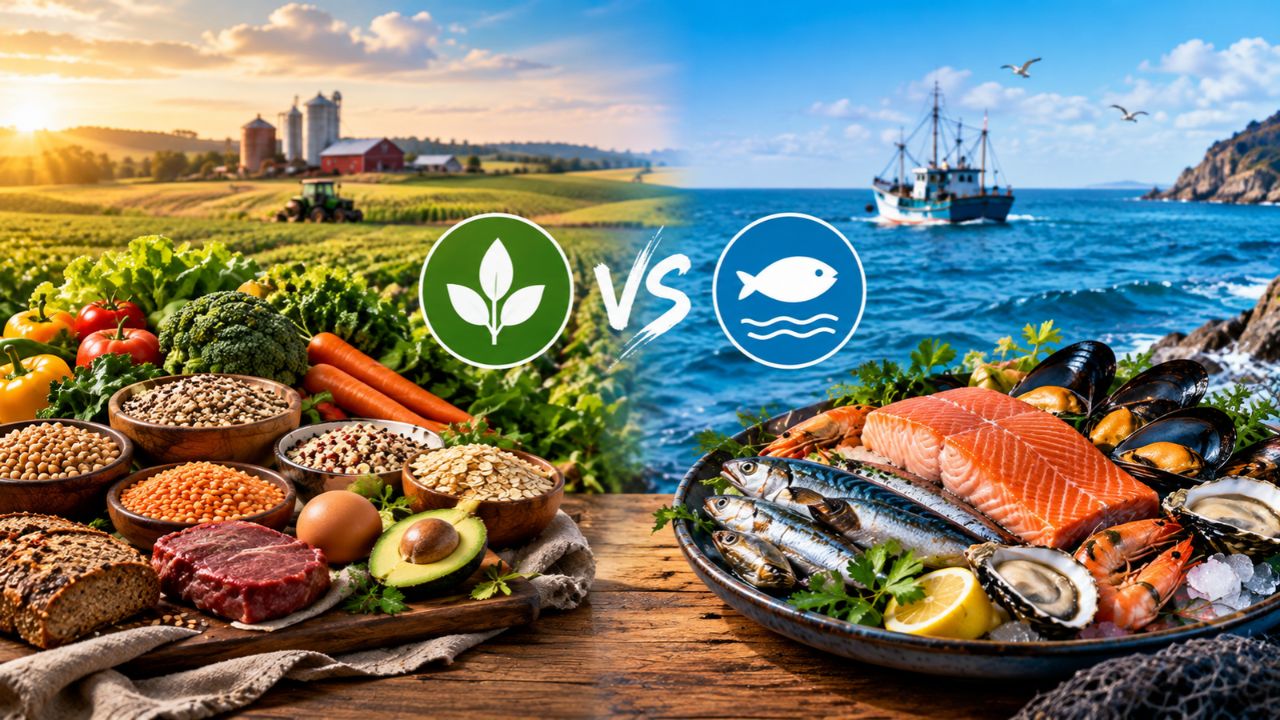
When people think about choosing between land-based food and seafood, the decision often comes down to something simple: what tastes good, what fits the budget and what is easiest to prepare. But there is a bigger question hiding behind that choice. The food on your plate is connected to nutrition, farming practices, natural resources and the way modern food systems are built.
In recent decades, foods made from corn, soy and other large-scale crops have become deeply woven into everyday diets. Vegetable oils, processed snacks, animal feed and countless packaged products depend on these crops. Seafood, meanwhile, plays a smaller role in many diets despite offering nutrients that can be difficult to get from other foods.
Why Seafood Gets So Much Attention
One of the biggest nutritional differences involves the types of fats found in different foods.
Omega-3 and omega-6 fatty acids are both essential. Your body needs them, but it cannot produce enough of either on its own. The issue is that modern diets can provide large amounts of omega-6 because refined vegetable oils and processed foods are so common.
Oily fish such as salmon, sardines, mackerel and herring provide EPA and DHA, two long-chain omega-3 fats associated with cardiovascular and brain health. For people who rarely eat seafood, adding fish to the weekly menu can therefore be a useful nutritional change.
That does not mean every seafood meal is automatically healthy. Fried fish, heavily processed seafood products and dishes loaded with creamy sauces can have a very different nutritional profile.
Land Food vs. Seafood: How Do They Compare?
There is no single winner because the answer depends on what food you are comparing and how it was produced.
| Factor | Land-Based Foods | Seafood |
|---|---|---|
| Omega-3 fats | Generally lower, although some foods provide ALA | Oily fish can be rich in EPA and DHA |
| Land use | Can require significant land for crops and livestock | Wild-caught seafood generally needs little agricultural land |
| Water use | Can be substantial for crops and livestock | Usually lower for wild fish, but varies with aquaculture |
| Climate impact | Beef and lamb tend to have higher emissions | Often lower than red meat, depending on species and fishing method |
| Main concerns | Deforestation, soil degradation and fertilizer runoff | Overfishing, bycatch and poorly managed aquaculture |
| Good choices | Beans, lentils, vegetables and whole grains | Sardines, mackerel, mussels, oysters and responsibly sourced fish |
The table also shows why broad claims can be misleading. A bowl of lentils and a beef steak are both technically land-based foods, but their environmental footprints are dramatically different. The same applies to seafood: a responsibly managed fishery is not equivalent to an overfished stock.
The Environmental Picture Is More Complicated
It is tempting to label either land food or seafood as the environmentally friendly option, but reality is less straightforward.
Some forms of agriculture require enormous amounts of land and water, particularly when crops are grown to feed livestock. Beef and lamb generally have a larger climate footprint than foods such as beans, lentils and many vegetables.
Fishing has its own problems. Poorly managed fisheries can lead to declining fish populations, while certain fishing methods can cause significant bycatch and damage marine habitats. Aquaculture also varies widely depending on the species and farming system.
Shellfish such as mussels and oysters can be particularly interesting from a sustainability perspective because they generally require little or no feed. The way a food is produced can therefore matter just as much as whether it comes from land or water.
A More Practical Way to Eat
You do not have to choose one side.
A sensible eating pattern can include plenty of vegetables, fruits, beans and whole grains alongside moderate amounts of animal foods. If you eat seafood, choosing oily fish once or twice a week is one practical way to increase omega-3 intake.
It is also worth paying attention to the foods surrounding your main protein source. A grilled fish meal with vegetables and whole grains is very different from a heavily processed seafood meal served with fries and a sugary drink.
At the same time, cutting back on ultra-processed foods can be more useful than worrying about individual ingredients. Cooking more meals at home, choosing minimally processed foods and looking for responsibly sourced seafood are simple changes that do not require a complete lifestyle overhaul.
The Bottom Line
The land-food-versus-seafood debate is not really about choosing one winner. Both categories contain foods that can support a healthy diet and foods that are better eaten less often.
For everyday meals, the bigger picture matters: eat plenty of plants, include nutrient-rich protein sources, add seafood if you enjoy it and limit heavily processed foods. When choosing fish, consider both nutrition and where it came from.
A varied diet can be good for you without requiring an all-or-nothing approach to food.
Frequently Asked Questions
Is seafood healthier than land-based food?
Not necessarily. It depends on the particular food. Oily fish can provide EPA and DHA omega-3 fats that are less common in land-based foods, while beans, vegetables and whole grains offer important fiber and other nutrients.
Is omega-6 unhealthy?
No. Omega-6 fatty acids are essential and have an important role in the body. The practical concern is that many modern diets contain large amounts of refined oils and processed foods, while seafood and other sources of omega-3s may be eaten less often.
Is seafood better for the environment than meat?
Some seafood can have a lower environmental footprint than beef and lamb, but there is no universal rule. The species, fishing method and farming practices all matter. Poorly managed fisheries can create serious environmental problems.
What seafood is a good source of omega-3?
Oily fish such as sardines, mackerel, herring and salmon are among the better-known sources of EPA and DHA. Including a variety of seafood can help diversify the diet.
How often should you eat seafood?
For many adults, having fish around twice a week is a practical target often recommended by health authorities. Choosing an oily fish for one of those meals can help increase omega-3 intake.
Are plant-based foods always more sustainable?
Not automatically, but many plant foods, particularly beans, lentils and vegetables, generally have relatively low environmental impacts compared with high-impact animal foods. Production methods and farming practices still matter.
What is the simplest way to improve your diet?
Start with small changes rather than trying to completely redesign your meals. Eat more vegetables and legumes, choose whole grains, reduce ultra-processed foods and include nutrient-rich protein sources such as fish when they fit your diet and budget.